The History of Laptops: From Early Portable Computers to Modern Laptops
SEO Title: History of Laptops: From the First Portable Computer to Modern Laptops
Meta Description: Discover the complete history of laptops, from the Osborne 1 and GRiD Compass to modern MacBooks, ThinkPads, gaming laptops, and AI-powered PCs.
Suggested URL Slug:/history-of-laptops/
Focus Keyword:
History of Laptops
Secondary Keywords:
- history of laptops
- first laptop computer
- first portable computer
- evolution of laptops
- when was the first laptop invented
- oldest laptop computer
- history of portable computers
- first commercial laptop
- laptop evolution
- modern laptop history
The History of Laptops
Laptops have become one of the most important personal computing devices in the world. From students and designers to business professionals, programmers, gamers, and content creators, millions of people use laptops every day.
But modern laptops are very different from the early portable computers of the 1970s and 1980s. Early machines were heavy, expensive, and had very limited displays and storage. Today’s laptops can be thin and lightweight while offering powerful processors, high-resolution displays, fast SSD storage, long battery life, Wi-Fi, Bluetooth, and advanced graphics.
So, when was the first laptop invented? And how did portable computers evolve into the powerful devices we use today?
The history of laptops is a fascinating story of engineering, miniaturization, competition, and changing user needs.
What Is a Laptop?
A laptop is a portable personal computer designed to perform many of the same tasks as a desktop computer.
Unlike traditional desktop computers, laptops combine the major components into a single portable unit. A typical laptop includes:
- Display
- Keyboard
- Touchpad
- Processor
- RAM
- Storage
- Battery
- Speakers
- Wireless connectivity
- Ports and connectors
The basic idea behind a laptop is simple: give users the ability to carry their computer and work from almost anywhere.
However, achieving that idea required decades of technological development.
Early Ideas Behind Portable Computers
The concept of a portable computer existed before modern laptops became popular.
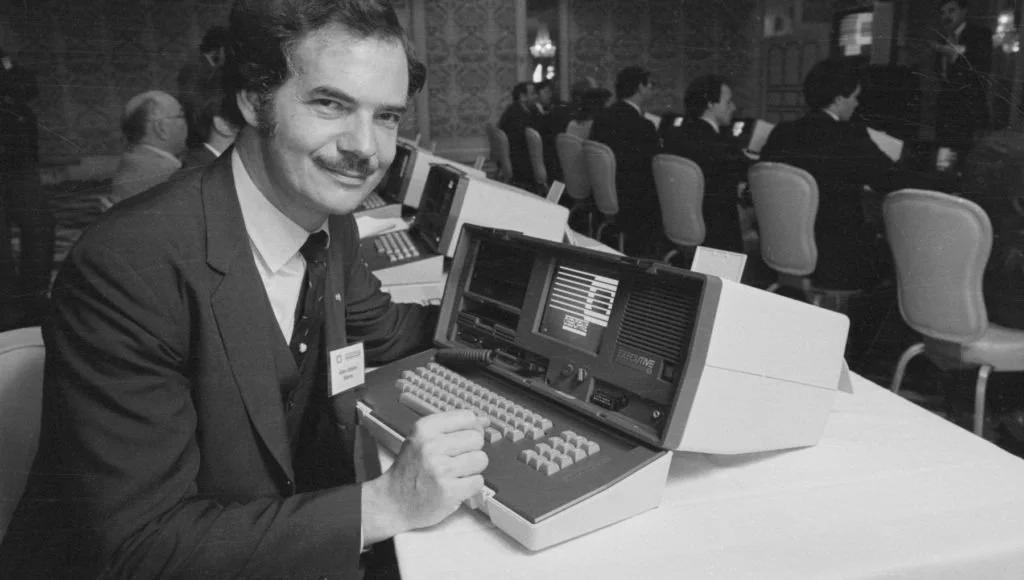
During the 1960s and 1970s, researchers began thinking about computers that could be carried and used outside traditional computer rooms. One influential concept was the idea of a personal portable computer that could provide computing power wherever the user went.
Some early portable machines were not laptops in the modern sense. They were large, heavy systems that could technically be transported but were far from convenient.
The development of smaller microprocessors, memory chips, displays, and batteries eventually made truly portable computing possible.
1970s: The Beginning of Portable Computing
One important milestone in portable computing was the IBM 5100, introduced in 1975.
The IBM 5100 was much smaller than traditional computer systems of its time and was designed as a portable computer. It included a display, keyboard, storage, and processing hardware in a single unit.
However, it was still relatively large and heavy compared with today’s laptops.
During this period, engineers and researchers continued experimenting with ways to make computers smaller and easier to transport.
1981: The Osborne 1
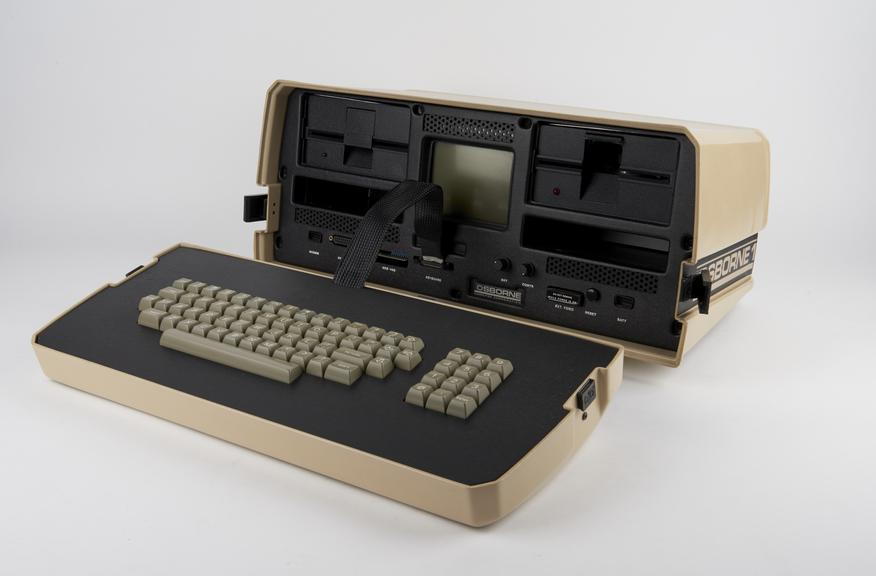
One of the most important milestones in the history of laptops came in 1981 with the introduction of the Osborne 1.
The Computer History Museum identifies the Osborne 1 as the first mass-produced portable computer. It weighed about 24 pounds and cost $1,795 when introduced. It included a 5-inch display, 64 KB of memory, a modem, and two 5.25-inch floppy disk drives.
Although the Osborne 1 was extremely heavy compared with a modern laptop, it represented a major change in personal computing.
It allowed users to carry a complete computer system with them.
The Osborne 1 also came with useful software, which made it attractive to business users. Its bundled software helped make the computer more valuable to customers.
Osborne 1 Specifications
| Feature | Osborne 1 |
|---|---|
| Year | 1981 |
| Weight | About 24 pounds |
| Display | 5-inch |
| Memory | 64 KB |
| Storage | Two 5.25-inch floppy drives |
| Modem | Built-in |
| Price | $1,795 |
The Osborne 1 is therefore an important part of the history of portable computers.
1982: The GRiD Compass
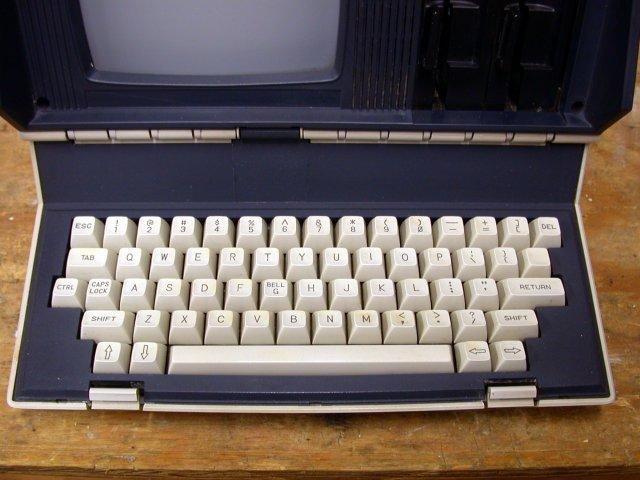
Another major milestone came in 1982 with the GRiD Compass 1100.
The Computer History Museum describes the GRiD Compass as likely the first commercial computer created in a true laptop-style format. It used a clamshell design in which the display folded over the keyboard.